Chinese Tech Vs US Tech: Who is Winning?
Need the lowdown on the tech rivalry between the United States and China? Here you go.

Technology plays a central role in the economic development of any nation. The application of technological innovations boosts economic productivity by improving efficiency, reducing costs, and improving the quality of goods and services. Hence, the rate of technological advancement of any people is a good yardstick in determining that people’s economic development.
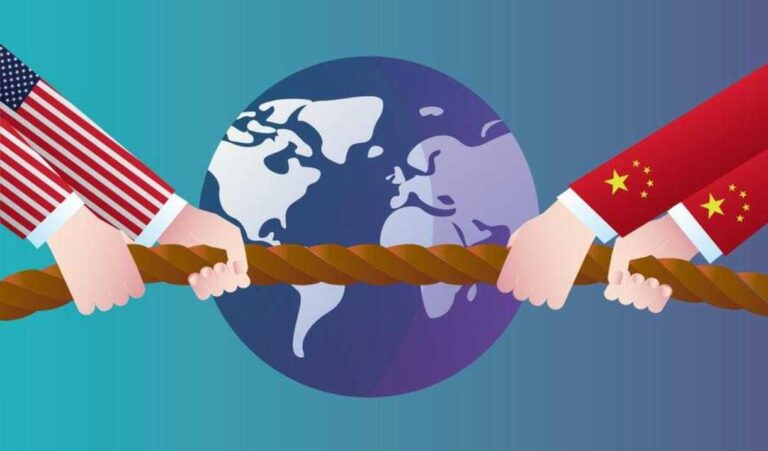
At the turn of the last century, America took over from Europe as the world’s technological capital. Then came Japan as a strong competitor, and now it’s China. Both the US and China currently compete head-to-head in various industries, from electronics to weapons, machinery, automobiles, clothing, and many more.
This post compares technological innovation from both the United States and the People’s Republic of China, with a purpose to discover who is winning and what the future might hold.
Technocracy Vs Oligarchy
Most comparisons of China and the USA begin with America’s democracy and end with China’s authoritarian government. In the name of economics, however, let us compare the two countries from a different, but equally important perspective–China’s technocratic system of governance, versus America’s oligarchy.
A 2014 study by a Princeton University professor professed the United States to be an oligarchy. While the current U.S president, Donald Trump, is a typical oligarch, there are hundreds, probably thousands more very rich Americans who wield power from behind the scenes. Yes, it’s all about freedom and every American being able to exercise their fundamental rights, but how does such a system compare with a technocracy?
It may or may not surprise you to discover that a large proportion of China’s administrators have technical/engineering degrees. This includes everyone from city to province administrators, all the way to heads of ministries and even the presidency, such as the current president Xi Jingpin and his predecessors Hu Jintao and Jiang Zemin, who all have engineering degrees.
If you have ever worked in a tech lab before, then you must know the joy that comes with getting a project to work. The oligarch’s joy, on the other hand, comes from making profits.
For instance, a technocratic government will build a difficult bridge in a terrible geographic terrain and even install a waterfall in it, just because they are capable of building it and it is the right thing to do. An oligarchy will see the minimal near-term economic benefits of such a bridge as a turn-off, and it may never be built, thereby delaying economic and technological developments in other sectors of the country.
China recently commissioned the Huajiang Grand Canyon Bridge on 28th Sept. 2025 as the highest bridge in the world, thereby breaking their very own record.
Stocks & Their Prices
A common way of evaluating companies is through their stock prices and market capitalization. It makes sense because a company with huge future potential, such as Nvidia that makes chips for the artificial intelligence industry, should rightly see its stock prices soar. The question, however, is “how much is too much?” Is Nvidia truly worth $4 trillion, or is it just a bubble?
Let’s compare two similar tech companies, so you can get a better picture. Tesla, the EV maker, reported total 2024 revenues of $98 billion from selling 1.8 million vehicles, while its Chinese rival, BYD reported $107 billion from selling 4.3 million vehicles. BYD had a 22.3% gross margin and a 30% growth rate, while Tesla had an 18.4% margin and a 1% growth rate.
Despite all these facts, Tesla’s market valuation at $1 trillion is 5 times more than BYD’s valuation of $174 billion. You do the math.
| Category | Tesla | BYD |
|---|---|---|
| Founded | July 2003 | February 1995 |
| Revenue (2024) | $98 billion | $107 billion |
| Cars Sold (2024) | 1.79 million | 4.27 million |
| Revenue Growth (2024) | 1% | 30% |
| Gross Margin (2024) | 18.4% | 22.3% |
| Market Capitalization (2024) | $1.09 trillion | $174 billion |
The Artificial Intelligence Industry
According to Harvard economist Jason Furman, 90%+ of the increase in US GDP figures for the first half of 2025 came from AI. Yes, US companies are pumping huge amounts of capital into artificial intelligence, with many such as OpenAI, Meta, and Google at the forefront of offering chatbot AI services worldwide.
Chinese companies are equally developing LLM chatbot systems like the Americans. But it would seem that the majority are more focused on integrating AI into everyday products, such as smart devices, autonomous cars, robots, and various household appliances.
While Chinese engineers dominate the AI field, with 50%+ of the world’s top AI researchers being ethnic Chinese, US corporations are pouring humongous amounts of capital into the industry. So, it’s currently difficult to say who is winning in AI right now; time will tell.
Electric Vehicles
Tesla was once synonymous with innovation in the EV world, but Chinese EV makers like BYD have changed the landscape. For instance, in September 2025, a modified version of the BYD Yangwang U9, known as the dancing electric supercar, broke the world speed record at 496 kph in Nurburgring, Germany. The video is here, but critics say the record attempt did not follow established protocols.
Aside from dancing and breaking world records, the U9 can also jump – yes, like Knight Rider’s KITT does Turbo Boost. Then there’s the BYD Yangwang U8 SUV that can drive on water and do 360° turns on the spot. Finally, the company is also making affordable EVs like the BYD Seagull with a 30kwh battery, which cost just $7,800. (not a typo)
Still on electric vehicles, while BYD holds a 17.8% share of the global battery market, another Chinese company, CATL holds a 37.5% share. In total, Chinese companies control 63%+ of the global EV battery market.
Chips & Hardware
The US president, Donald Trump, imposed export controls on companies such as Nvidia in 2024 to help slow down growth in the Chinese computer industry, especially in AI. In 2025, however, China struck back with various policy changes and export restrictions limiting rare earth exports to the West.
In simple terms: The US does not want China to advance in chip making, and China equally does not want the US to advance in chip making, weapons manufacturing, modern radars, and plenty of other industrial sectors that depend on rare earths.
Companies such as Huawei are already making advancements in their homegrown chip fabrication technologies, with the Huawei Kirin X90 chip, for instance, becoming the first 7nm chip entirely designed and manufactured in China. In trying to limit China, the West pushed the Chinese deeper into the chip industry, and heaven knows what upcoming Chinese chips are about to offer to the rest of the world in terms of performance and price.
The US, on the other hand, has a bigger problem. Gallium, germanium, europium, terbium, thulium, yttrium, and scandium are some of these rare earth elements and metals, over which China controls over 60% of its global mining and over 90% of its refining capacity.
Sure, the US is setting up rare earth factories, starting in Australia, but it will take decades for the US to completely develop a supply chain for all the 21 rare earth elements sanctioned by China. Until then, projects like the F-35, submarines, radar systems, Tomahawk missiles, and, of course, chip production for data centers and artificial intelligence will stall without rare earth supplies from China.
Cloud & Software
The US still leads the world in software development, and that might not change anytime soon. However, software successes from China, such as TikTok, cannot be overlooked. It shows the potential of Chinese software, which, on the other hand, faces many challenges.
In a bid to secure their population from Western propaganda, the Chinese government erected the Great Firewall to cut off a majority of the Chinese from the rest of the internet, which is basically English and US-dominated. While this move also gave local software developers a lot of room to maneuver and grow, it makes it impossible for American and Chinese software to be compared side by side.
Furthermore, cultural differences such as the language barrier between China and the US make it impossible to make side-by-side comparisons of similar software from both countries.
Robotics
The Chinese company BrainCo recently unveiled an AI-powered bionic prosthetic hand. What this means is that a physically disabled person can regain access to his/her limbs without invasive surgery like Elon Musk’s neural link, which comes with a new set of problems.
The hand prosthetic uses artificial intelligence to read and learn the meaning of the energy signals produced on the patient’s limbs, and this helps the patient to relearn doing stuff like playing the piano, lifting weights, and many other amazing possibilities.
Another impressive development is the robotic exoskeleton legs that cost less than $1,000 and that you can rent for the day for about $22. While exoskeletons are not new, the ability to rent or buy such robotic legs for so cheap is truly revolutionary.
Renewable Energy
Few people are aware that China is the current world leader in renewable energy. Yes, that is the truth. Chinese companies produce more solar panels than the US, and in the first half of 2025, China has already installed more than twice the solar capacity of the rest of the world combined. The same goes for wind energy.
The problem with renewable energy, however, has always been its intermittent nature–the sun doesn’t always shine and the wind doesn’t always blow. Energy storage systems such as batteries, therefore, determine how much renewable energy installations cost.
Batteries initially cost over $700 per kWh to install a few years ago, then gradually reduced to below $300 and cost slightly less than $200 per kWh today. But that was until the world’s largest battery maker (with 38% market share), CATL, announced this year that they would soon be introducing sodium ion batteries which have similar performance to lithium ion batteries but are 90% cheaper. In other words, CATL will be introducing EV batteries that cost about $20 per kWh and CATL is a Chinese company.
List of US Tech Heavyweights
Here are some of the most notable US tech corporations.
Google: American tech giant behind Android, Gemini AI, and cloud platforms.
Apple: Started off with the sensational AI assistant Siri.
Tesla: America’s darling EV maker.
Nvidia: Chip maker with stock prices off the roof.
Amazon: E-commerce and cloud platforms for all your computing needs.
Microsoft: Software giant, AI co-pilot for writing, editing, and routine tasks.
Meta: Social media giant, Facebook’s parent company.
OpenAI: Known for ChatGPT and Sora.
List of Chinese Tech Heavyweights
Here are some of the notable Chinese tech companies.
Huawei: Renowned smartphone, PC, and EV maker.
BYD: Build Your Dreams. Maker of the world’s fastest production car.
CATL: World’s largest EV battery maker.
Alibaba: E-commerce with cloud and AI platforms.
Tencent: WeChat, cloud, games.
Bytedance: Tiktok, Douyin, CapCut, and games.
Xiaomi: Smartphones, tablets, EVs.
Baidu: Search engine, AI, cloud, ads.
Frequently Asked Questions
Here are some of the most frequently asked questions regarding the tech rivalry between China and the US.
Q: How are US companies affected by the US-China tech rivalry?
A: US tech companies in all sectors are negatively affected by China’s rise in tech supremacy. This is equally true for software, where the US is poised to take over TikTok.
Q: Will China catch up or even surpass the US in technology?
A: Yes, China has already caught up with the US in many tech sectors and additionally surpassed the US in others.
Q: Does China or the US have a better ecosystem advantage over the other?
A: American companies have an immense capital backing from the US Dollar. Chinese companies have the central planning and support of the CPC behind them.
Q: Can the US-China tech rivalry lead to war?
A: Yes, it can. China’s rare earths export control is a huge economic blow that if not relaxed or completely eradicated, can lead to an ugly escalation.
Conclusion
To round off our exploration of the tech rivalry between the Chinese and the US, we still need to answer the lingering question of “who is winning”? And to put it bluntly, China is winning. China has been winning for some time now and given their fast pace in innovation and scaling products, only a war can stop China from winning.
Related Articles