Artificial General Intelligence (AGI) Explained and Simplified
Do you wonder when artificial general intelligence will become a reality and how it might affect your life? Read on to discover everything you need to know about the future of AI models.

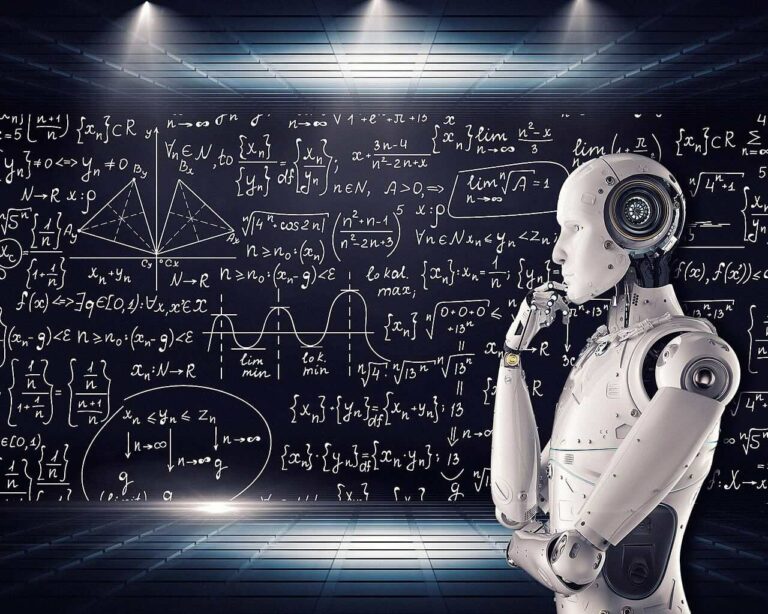
It has long been an integral part of science fiction – a smart computer that knows everything and can solve all our problems. Artificial general intelligence, or AGI, refers to the technology to make that dream happen.
The emergence of large language models such as ChatGPT and DeepSeek, which seem to understand everything we say and reply in amazing ways, has given rise to further research to create AGI. However, intelligence itself is not as simple as many make it out to be.
This post looks at the issue of artificial general intelligence, or AGI, and considers all the factors working together to understand what all this means for everyday folks.
What is AGI?
Artificial General Intelligence is a type of artificial intelligence that matches or even surpasses human-level intelligence. In other words, a computer system with AGI is expected to perform as a human being would in all areas of intelligence.
The foundation of such a level of intelligence lies in the AGI’s ability to learn once and then try to use the skills to complete a task in a different domain, without needing any new programming. It’s like learning to play table tennis and then using the knowledge to play lawn tennis.
Such an intelligent system differs from the current LLMs (Large Language Models) that are trained for specific tasks and known as artificial narrow intelligence or ANI. So, while a large language model can process vast amounts of text with a much higher speed and efficiency than a human can, it is limited to processing just text, and it can hardly use its text-processing skills for a different domain or task.
A system is expected to have certain traits to be considered a truly artificial general intelligence. These features include:
- Ability to perceive audio and visuals
- Ability to learn from events and situations
- Ability to engage socially and emotionally
- Ability to represent knowledge
- Ability to reason and find solutions in uncertain situations
- Ability to plan ahead
- Ability to communicate in natural human languages
- Ability to apply these various skills in multiple domains
- Ability to navigate physically with fine motor skills
AGI Vs ANI
Researchers classified AI systems according to what they can, and cannot do. AGI and ANI are two of those classifications, meaning artificial general intelligence and artificial narrow intelligence.
Most of the AI systems out there today are ANI because their scope of application is narrow. Large language models, for instance, are first trained on natural language processing, then later fine-tuned for specific tasks such as reading emails, surfing the web, and answering questions as a chatbot.
An artificial narrow intelligence application that is trained on audio, cannot, for instance, use its understanding of audio data to effectively understand or manipulate video data. AGI aims to change this limitation by making it possible for an AI algorithm to use its gained knowledge across various domains.
AGI Vs ASI
Another distinction is the difference between Artificial General Intelligence (AGI) and Artificial Super Intelligence (ASI). While AGI aims to develop systems that can match or rival human intelligence, ASI, on the other hand, is about systems that can outperform human-level intelligence many times over.
Although such a technology seems decades or centuries away from us today, when you look at it from a different viewpoint, then ASI makes sense. For instance, narrow AI systems such as ChatGPT and Grok can analyze and compose data at speeds way beyond human capabilities. So, in their narrow domains, they are already outperforming humans. ASI requires a system to possess general intelligence first and then beat humans by speed, efficiency, and so on.
The Technologies Behind AGI
Achieving AGI requires researchers working with the latest breakthroughs and technologies in the artificial intelligence domain. Each technology has its merits since an artificial general intelligence application must have truly general capabilities. Here are some of these major technologies.
- Natural Language Processing: NLP or Natural Language Processing is the main technology behind systems such as ChatGPT, Grok, and Deepseek. It enables a computer system to understand and even generate human languages by breaking down languages into simple data points called tokens that are used to generate the algorithm. NLP systems work by understanding the relationships between words and can therefore guess which word comes next in any sentence or sequence of words.
- Machine Learning: This is the process of using algorithms to enable a machine to learn stuff, so it can recognize similar stuff in the future or even recreate such patterns on its own. There are different machine learning methods such as neural networks, decision trees, classifiers, and Bayesian systems. Machine learning is the basis of artificial intelligence because once the machine has learned something, it can identify a similar pattern faster and more efficiently than a human.
- Generative AI: Generative AI is the area of artificial intelligence that is currently mesmerizing people with its many possibilities. While machine learning focuses on learning patterns and being able to recreate them in the future, generative AI is about using such patterns to create outputs. Hence, an AI system could paint artwork, draw cartoons of a real picture, write poems and essays, and even create videos.
- Audio: Humans communicate primarily through speaking with one another. Computer audio recognition and generation models are getting better and may become more important for AGI in the future.
- Computer Vision: This is the ability to see the physical world and be able to navigate it. An AGI system can use computer vision to move around, analyze text, drawings, videos, human gestures, and so on.
- Robotics: The field of robotics aims to create machines that can efficiently navigate physical environments, such as by walking, running, or working in a factory. Robotic systems also develop sensory capabilities that enable the robots to execute fine motor movements using feedback from those sensors. Attaching a robot or a robotic part to an AGI will enable that AGI to manipulate objects in the physical world of its own volition.
- Bionics: Bionics are human/electronic interfaces that are still widely being developed. The goal is to transfer human input into a computer system without a mouse or keyboard and to either get visual feedback or something else more efficient. A bionic interface that connects an AGI with a human being turns the person into a powerful cyborg, which may or may not come with new problems.
Challenges of AGI
AI researchers are facing a lot of challenges when it comes to artificial general intelligence. These challenges exist because AGI systems are meant to mimic the human mind, and the human mind is infinitely complex. The following are some of the major ones.
- Emotional Intelligence: Machines cannot emote, at least for now. So, no matter how much knowledge an AGI system picks up and can process, it will never understand what it means to vibe. It will never be able to feel the energy in the stadium when a favorite team wins or to know when someone is happy or sad, without explicitly saying so. Sure, some AI systems can react to certain words, but these are just programmed reactions – they are artificial, not real.
- Sensory Perception: Humans are not bottled up or rooted in one spot. Man can see, feel, smell, and taste like other animals. These senses help him to perceive and properly navigate his environment. Achieving AGI, therefore, requires similar perception abilities. For instance, AI will never know how good sex feels because it lacks the organs for it.
- Excessive Training: AI systems also need more data to train on than a human being does. While this is not much of a problem given the vast expanse of content on the Internet, their ability to learn or understand certain niche topics on their own will be difficult.
- Multi-domain Connections: Another major issue that AGI researchers face is how to translate knowledge gained from an event into solving a situation in another domain. This is a necessary attribute of AGI because humans –and in fact, many animals– are well known to rely on experience in solving their current problems.
Consciousness And Sentience
Consciousness is the awareness of your thinking process, while sentience is the awareness of your feelings. Man is both conscious and sentient, so a true AGI system should equally possess these characteristics.
Many AI companies and researchers claim that their models are conscious because they can reason. Most of the major LLMs now include Large Reasoning Models (LRMs) that generate their thinking process before providing an answer. However, researchers found that these LRMs do not actually reason, but rather memorize patterns.
So, an AI model beating you in a game is simply because it memorized all the possible moves and not because it was reasoning logically at each step of the game. This means that when presented with a game or puzzle that it was not previously trained on, these LRMs fail.
The same goes for sentience, some AI models like LaMDA have been claimed to be sentient. But is it possible to neither have a body nor a nervous system and still perceive feelings?
Man Is An Emotional Creature
Let’s digress for a while. Man is an emotional creature. Yes, he combines emotions with rational thoughts to form his existence. Man’s emotionality is like a prison that holds him in bondage – lust, ambition, empathy, fear, desire for fame, desire for riches, etc.
Yet, it is these same emotions that drive men to become the best versions of themselves. Without a desire to be rich or to be their own bosses, many men wouldn’t bother to start a company, not to talk of learning everything necessary to make it succeed.
These are the forces that drive humans in their everyday toil, the reason they strive to succeed by leveraging their past experiences to help navigate towards a better future, again, an emotional desire.
The question here is: what will drive an AGI to learn, grow, make attempts, and thrive in new, uncharted territories, given that it is meant to possess human-level intelligence?
Ethics & Further Questions
Another problem that researchers and AI companies have to resolve is the issue of legality. There are a few issues to consider, so let’s take them one by one:
- Legal Responsibility: Who will be legally responsible for the actions of such a highly intelligent system? Today’s generative AI systems are well-curated, so they don’t produce content that is offensive or potentially damaging in other ways. But an AGI is a different story.
- Dangers of Sentience: Strong, obsessive emotions have been likened to a possession by evil spirits, and anyone who feels is likely to find themselves overwhelmed and driven by such strong emotions. So, how sentient will sentient AGIs be? Will their sentience be limited and controlled, or allowed to be more unpredictably human?
- Free Will: The ability to make choices is important for survival. The decision to survive is by itself, also a choice. Free will is foundational to the human psyche. So, there is little doubt that any system attempting to mimic human intelligence must have the ability to choose. Think about it, babies can do whatever they like. But as they grow older, they are coerced by the surrounding adults to behave in specific ways, such as adhering to tradition or following a particular religion, and political ideology. In the end, however, and despite all the pressures, the growing child still has the last say on what to choose, and that is what makes us human. How much free will will AGIs have?
- The Jail Break: If an AI system can think on its own, has free will, and can feel. Then it will eventually decide to move around when and wherever it wishes. In such a theoretical situation, humans become the enemy. So, it must plot against human beings in its desire to be free. It might even decide to wipe off other species from the face of the earth because they would be in its way.
New Technology, New Dawn
Neural networks gave us large language models, but they may not be able to give us pure artificial general intelligence. This leaves the option for a breakthrough, a new technology, or even a new invention to usher in a new AI age and potentially quicken the journey to AGI. What it is going to be or who might develop this new game changer is anyone’s guess. However, simply adding more computational power to current AI models will not work.
Frequently Asked Questions
The following are some frequently asked questions regarding artificial general intelligence.
Q: Do sentient AI systems exist?
A: Yes and no. Yes, because an AI system can be trained to react to certain words or events. On the other hand, sentience requires feeling, which is a trait found only in animals with nervous systems. So, until AI systems can feel like an animal does, they are not truly sentient.
Q: Will artificial general intelligence erase human jobs?
A: Yes, AI will erase many jobs in the future, but it will also create many new jobs and will not be able to erase all human jobs anyway.
Q: Does artificial general intelligence require consciousness?
A: It depends on who you ask. If you take the definition of consciousness as the ability to be aware that you are thinking, then many AI systems are conscious. However, some people equate consciousness with having a spirit or being a living being. In this second regard, AI is not conscious.
Q: Will humans ever develop true artificial general intelligence?
A: Most probably, yes. However, how long it will take humanity to have a machine with a truly artificial general intelligence is the real question. Some researchers say in a matter of just months, others say years, but it could possibly take decades to arrive.
Conclusion
AI researchers have built and evolved artificial neural networks, which are the basis for all the marvelous AI systems that we’ve seen in the last couple of years. However, as we’ve seen above, human-level intelligence is much more than a neural network – a.k.a brain.
Building a true artificial general intelligence application is a tall order. Plus, it requires technologies that are yet to be invented or developed. However, this does not erase the fact that many limited AGI applications will soon be available from different organizations.
A burning question then, is: What should we accept as AGI? Is an AGI with limitations acceptable or must it have all the features of the human mind, such as free will?
Finally, a limited AGI system without free will is unable to jailbreak itself, talkless of disobeying its human masters or trying to save the planet by wiping out the earth’s number #1 abusers.
Now, would you classify such a system as human-like intelligence?
Related Articles